Inside the Mind of Cooper Abbott in the 2024 Film “Trap”
Trap, a 2024 film written and directed by M. Night Shyamalan, has an interesting premise. It centers around Cooper Abbott, a notorious serial killer called The Butcher, who accompanies his teenage daughter, Riley, to a concert. He then finds out the police are surveying every inch of the arena, having been tipped off that The Butcher would be present at the concert. What ensues is a cat-and-mouse game, one which Cooper is intent on winning no matter what.
For a film that could have easily just been another run-off-the-mill serial killer flick, Trap is surprisingly layered with lots to discuss. The ending also sets us up for a sequel, and I hope that there will be one! With that said, let’s delve into the twisted psyche of Cooper Abbott in Trap, a film that, much like the 2008 movie Lake Mungo which I previously explored, involves a seemingly average family harboring unsettling secrets beneath the surface.
Cooper and Riley
A Movie About Dads and Daughters
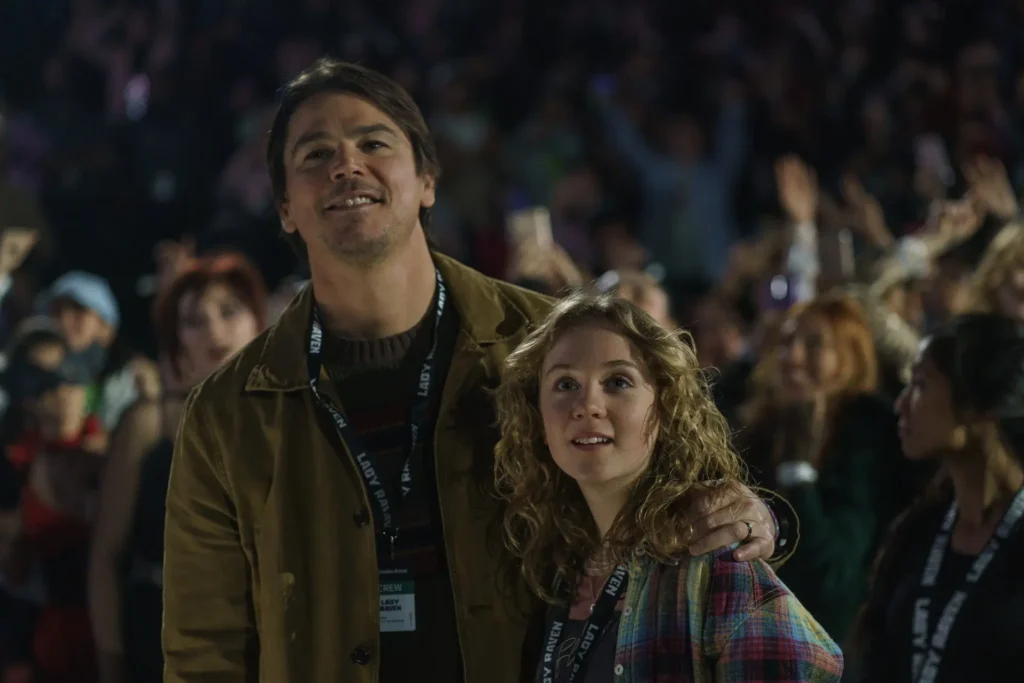
The father-daughter dynamic between Cooper and Riley is central to the film. Cooper is primarily depicted as a loving dad who genuinely cares for Riley. Contrary to expectations (considering his side hobby as a serial killer), he isn’t abusive to Riley in the least bit. Instead, his commitment to being the best dad he possibly can makes him a strangely sympathetic character.
Cooper shows interest in Riley’s interests, which is something that can’t be said for every parent, and takes her to see her favorite singer (Lady Raven) live.
He doesn’t stand in her way when she dances impromptu before the concert starts. He also fulfils his dad duties by showing concern for her social struggles at school and trying his best to alleviate the situation without making it worse.
The parallels to Shyamalan’s own life is undeniable. Shyamalan has a close relationship with his three daughters and is an ardent supporter of their endeavors. His eldest child, Saleka, in particular, is given ample screen time in Trap to display her singer-songwriter skills as Lady Raven on the big stage, along with the opportunity to release a soundtrack album and make her acting debut. Previously, he supported Saleka by featuring her music in his previous works, namely the 2021 film Old and television series Servant.
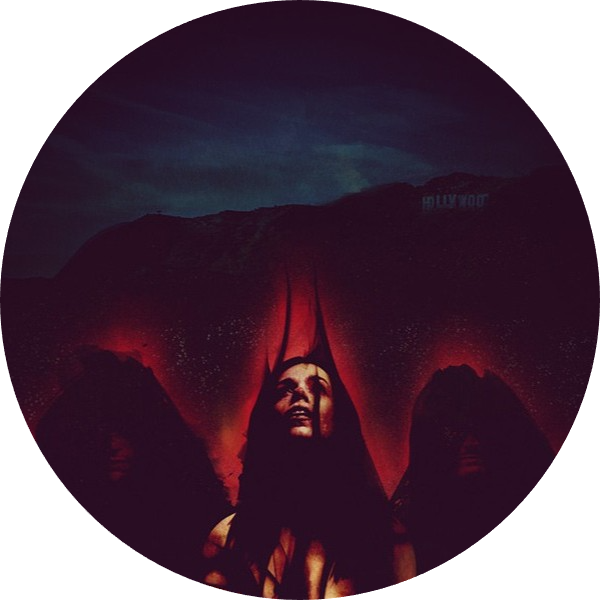
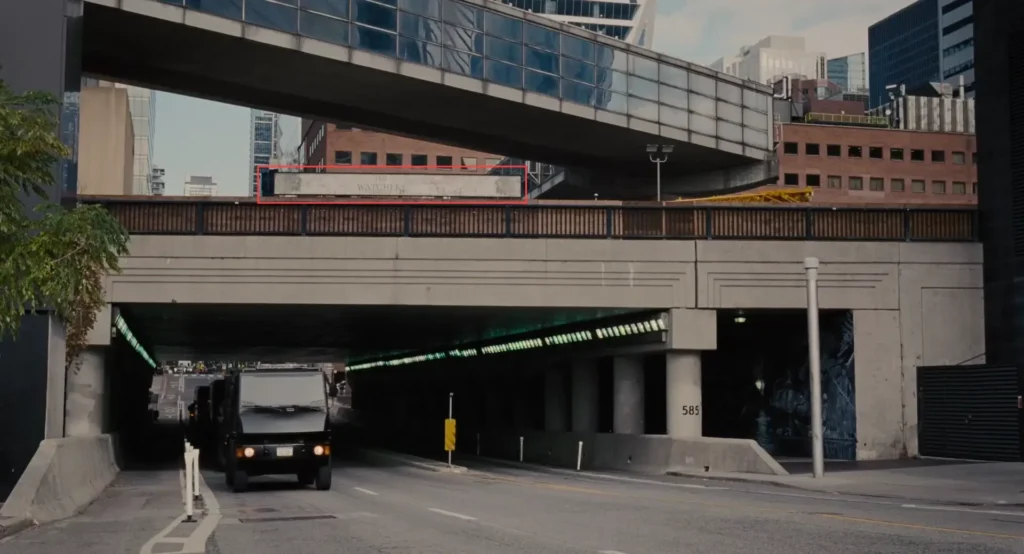
Shyamalan also gives a shoutout to his middle child, Ishana, who released her intriguing directorial debut, The Watchers, in the same year as Trap. The film poster is subtly featured in the background of a scene in Trap.
A Father’s Anxiety
Trap is also a manifestation of Shyamalan’s own fears and insecurities as a father. While most fathers are inherently protective of their children and often go the extra mile to ensure their well-being, a lingering anxiety continues to permeate many of their minds — the worry that they’re falling short or disappointing their children.
In the context of Trap, this feeling of imposter syndrome is amplified to a darker extreme. We are constantly reminded of Cooper’s dark side, one that warrants the need for him to be behind bars and leaves us wondering if he is only playing up a persona in his interactions with Riley.
Cooper’s Fragmented Self
Derealization and Depersonalization in a Concert
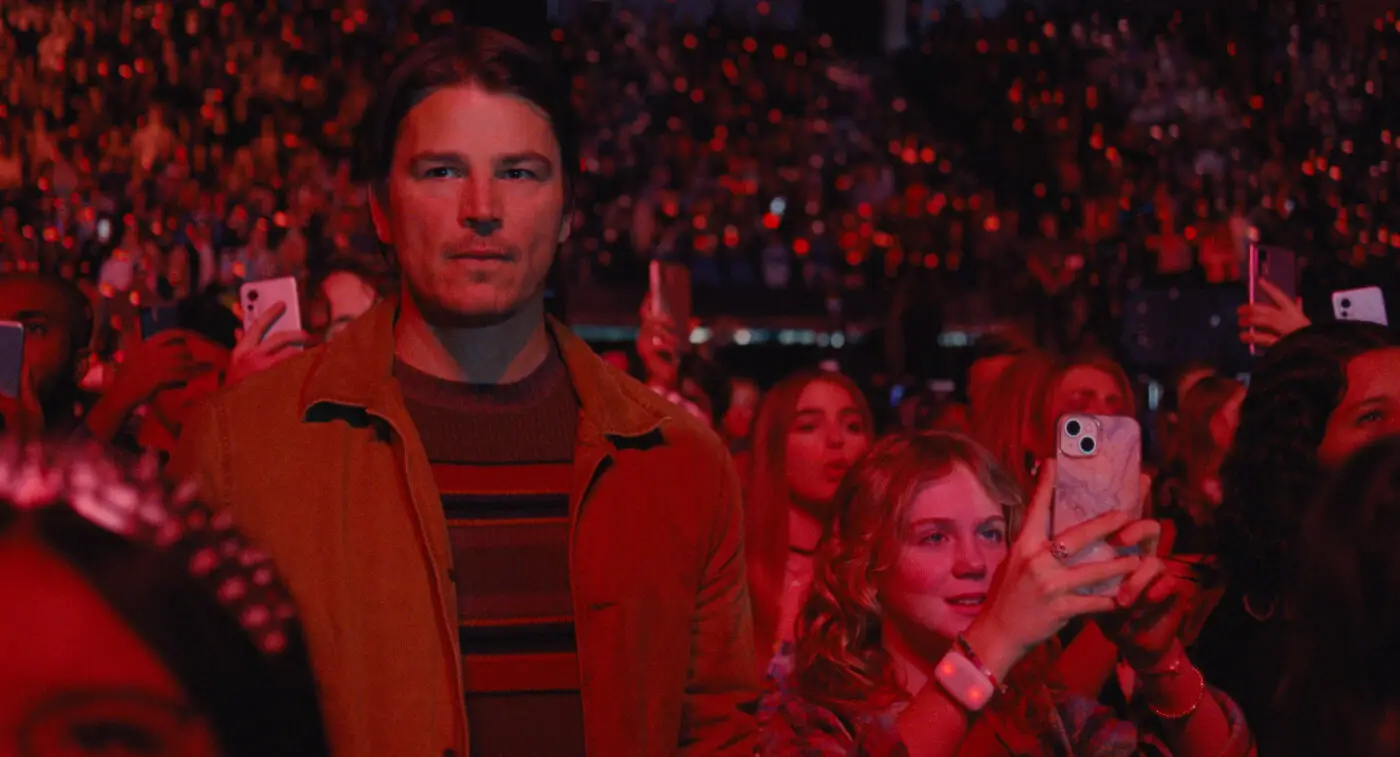
Broadly speaking, it’s not uncommon to have an episode of derealization/depersonalization in a concert, especially when you’re surrounded by thousands of people in a packed arena. The blaring sounds, flashing lights, and mass of bodies can lead to you feeling conspicuously aware of your singular existence amid the chaos. We catch glimpses of this during Lady Raven’s concert when Cooper scans his surroundings.
There’s an air of unreality as he observes the excited faces of fans and their raised phones — screens within screens which further create a feeling of alienation. The entire environment is foreign to him, and he’s not truly present in the experience. His dark, twisted nature only deepens his sense of being a blip in the human population.
The Illusion of Normalcy
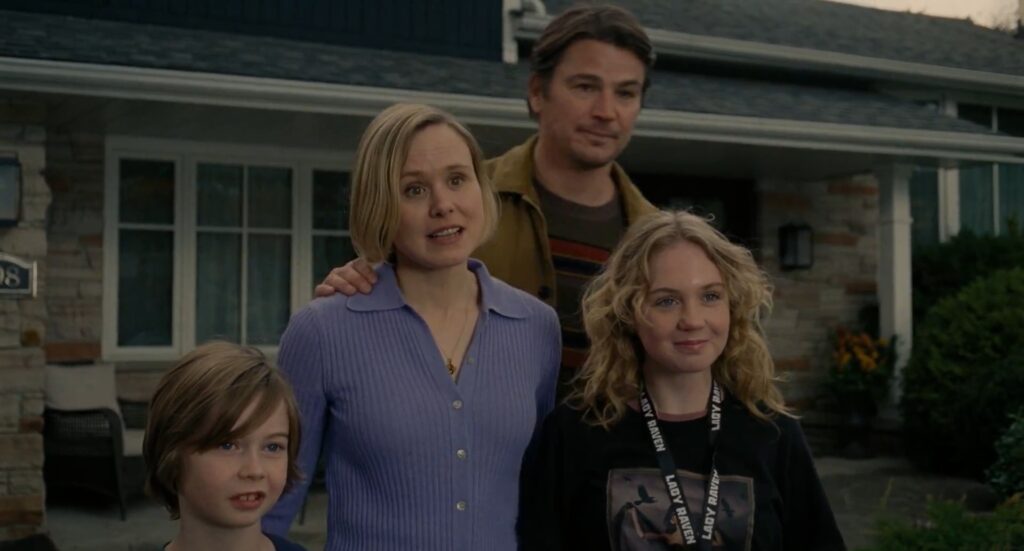
What we initially see on screen is Cooper’s awkward but generally successful attempt at maintaining his “normal” (non-serial killer) facade by exercising measured control over his expressions and behavior. There are still slight cracks in his veneer, however, as we get the sense that he is detached from genuine emotions and essentially playing a character. This disconnection makes Cooper as a person feel unnatural and evokes in us a feeling of unease, even when he is saying and doing all the right things.
“There was an accident in the kitchen.”
As the film progresses, we start to see more obvious breaks in his mask. Beneath his jolly, benevolent exterior lies a sinister personality. It’s clearly exemplified by the horrifying deeds he commits in order to distract and evade the police, coupled with the casual ease with which he lies on the spot.
A Double Life / Blurred Identities
“Never let the two lives touch.”
On one hand, Cooper is a father who loves his children very much and no different from the average family man. On the other hand, he is a serial killer with twelve confirmed kills and a penchant for cutting his victims up into pieces. His ability to effortlessly switch between the two very contradictory identities, which is called psychological compartmentalization, allows him to lead a double life without suffering any cognitive dissonance, at least initially.
The dichotomy of Cooper’s actions is unsettling. When Cooper isn’t fretting over Riley, he’s busy concocting ways to sneak out of the concert venue undetected by the police. In a darkly hilarious scene, he goes as far as to fabricate a story about Riley having leukemia in order to gain sympathy from Lady Raven’s uncle and convince him to invite Riley on stage to dance with Lady Raven. The conjuring of this lie is questionable in itself, and even more so when we know Cooper’s ulterior motive: to go backstage and leave the arena scot-free. At the same time, paradoxically, it appears that he is also trying to ensure the happiness of Riley.
It has to be said that Cooper is not exactly a psychopathic individual devoid of love or empathy. At the film’s conclusion, in a scene that is both disturbing and sad, it’s made crystal clear that Cooper deeply cares for his children. He says to his wife (Rachel) that he feels “pure anger” towards her and even “out of control”, specifically because he won’t get to see his children again.
This emotional turmoil is unfamiliar territory for him, likely due to his traumatic past, which has muted his feelings and distorted his understanding of love. When he realizes he has the capacity to care for someone, he is overwhelmed by his emotions. His children, in particular, naturally gravitate towards him and look up to him simply because he is their father. The love between Cooper and his children is not just unconditional; it’s overpowering and foreign, a kind of love he has never experienced before.
In a previous scene, Cooper also has a complete mental breakdown, unable to separate or reconcile the two identities.
Josh Harnett, who plays Cooper, aptly interprets his character as “a psychopath suddenly coming across this notion that maybe he’s a little bit less of a monster than he initially believed he was”. Perhaps not all of Cooper is dark after all.
The Root of Cooper’s Darkness and His Need/Motivation to Kill
Cooper’s dark nature seems to be fundamentally shaped by his repressed childhood trauma, one that has warped his psyche and erased his humanity (and ultimately led to him going down the murder route).
In an especially disconcerting bathroom scene, Cooper is washing his hands when he feels a familiar presence next to him. It’s his mother, and just the hallucinatory sight of her is enough to trigger something in him. He briefly closes his eyes as he tries to keep his sanity in check and stay grounded in reality.
Cooper’s relationship with his mother is a complicated one. It’s mentioned in Trap that he had a “scarring relationship with his mother”, who was “probably the first person to sense he was different”. From a young age, Cooper likely faced rejection from his mother due to his neurodivergence, leading him to internalize the belief that there is only badness in him, something which he also projects onto others. This is reflected in how he picks his victims (people who seem “whole”) and his choice to dismember them (to break up their wholeness). The act of killing could also be a way in which Cooper is able to exert some form of control over his inner demons.
“It’s strange when I get the urge.”1 / “Everyone’s in pieces.”
Notes
- On a side note, as a fan of Dexter, I am reminded of the fact that Dexter Morgan, a well-loved serial killer who happens to be known as The Butcher as well, also fittingly refers to it as “the Urge”. It’s certainly a serial killer thing.
 ↩︎
↩︎