Grief and Loneliness in the 2008 Film “Lake Mungo”
The Premise
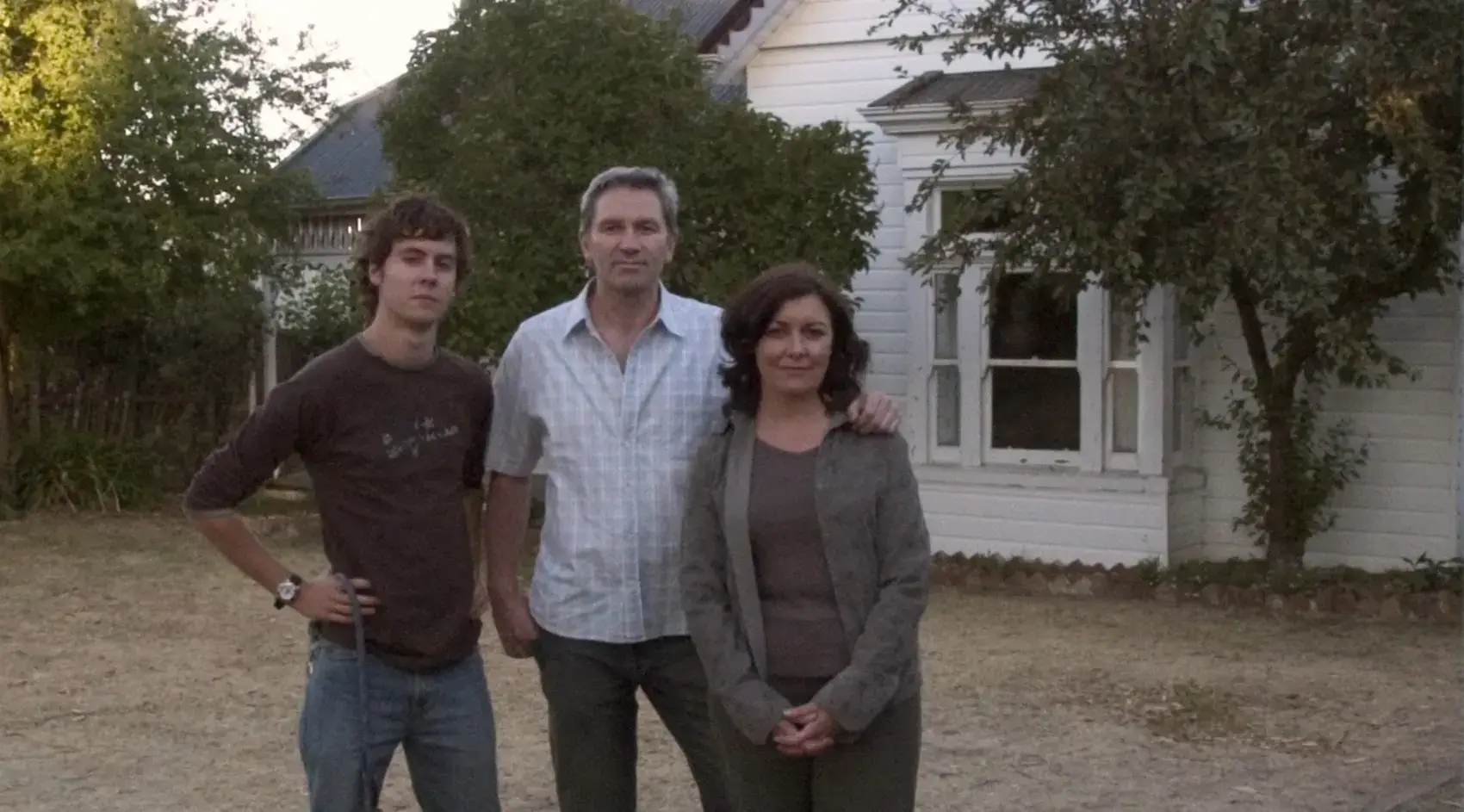
One moment, 16-year-old Alice Palmer is picnicking with her family, and the next, she disappears. Lake Mungo, written and directed by Joel Anderson, is a pseudo-documentary that delves into the aftermath of this incident and the impact of Alice’s passing on her family, friends, and the wider community. As the film progresses, we glean deeper insights into Alice’s personality, her relationship with those around her, and the hidden facets of her life.
Let’s revisit a deeply devastating film that deserves some love and attention. Grief, dread, impending doom, disconnection… and eternal loneliness.
Lake Mungo at Its Core: Grief and Loss
Lake Mungo is a meditation on grief and its effects on the lives the deceased has touched. Alice’s lingering presence in her family’s lives (as a ghost, in dreams and nightmares, in odd occurrences around the house, in their reluctance to switch off the porch light in case she comes home…) shows her family’s initial struggle to move on from their loss.
The Stagnation of Time
Time seems to slow down as the family grapples with Alice’s absence. This is beautifully portrayed in the form of still images and lingering shots with minimal camera movement. There’s a particularly eerie and surreal scene of the family’s car going backwards as they make their way back home without Alice.
Russell Palmer, Alice’s Father
Russell is determined to move on from Alice’s death and busies himself with work to avoid difficult emotions.
June Palmer, Alice’s Mother
Like Russell, June is haunted by visions of Alice. To cope with her nightmares, she takes long walks at night and ventures into other people’s houses, longing for some semblance of normalcy.
Mathew Palmer, Alice’s Brother
Mathew spends more time alone, choosing to fixate on his passion for photography. There are mysterious bruises on his body that seem to be a physical manifestation of his grief.
He also revisits the dam, the place where Alice drowned, and is seen wearing her jacket in a photograph of him at the dam. While that may seem suspicious, especially if you are a believer of the “Mathew is Hiding Something Nefarious” theory (which is discussed in the later part of this article), it is not uncommon for bereaved people to form attachments to specific places and objects and find comfort in them. His behavior seems to show his desire to feel closer to her presence in an attempt to cope with his grief.
It is later revealed that Mathew had been fabricating photographs and videos to include apparitions of Alice in them. Although it’s another move that seems bizarre and questionable, he clarifies that he did it to help his parents accept the reality of her death and find closure.
Understanding Alice: Her Loneliness
Secrets are progressively unraveled, bringing into question how well Alice’s family really knew her.1 On the surface, Alice appears to be a lively and vivacious person with a zest for life. She’s often pictured smiling and laughing with her friends and family.
But there is another side of Alice we come to know. She’s lonely, depressed, and emotionally disconnected from her family. A sense of impending doom hangs over her like a shroud. Her premonitions of her own death even includes an absolutely bone-chilling face-to-face encounter with her own bloated corpse, the one that would be eventually found in the dam.
Alice’s Imminent Death
“I feel like something bad is going to happen to me. I feel like something bad has happened. It hasn’t reached me yet, but it’s on its way.”
Having no one to turn to, Alice resorts to consulting a psychic (Ray Kemeny) to process her heavy feelings and thoughts of her inevitable death. Whether or not you believe psychics are real, there is no doubt that Ray is an extremely emotionally intelligent person and a trusted confidant of his clients. He was a source of comfort for Alice in a time when she felt helpless and had difficulty expressing her feelings to her emotionally detached family.
Alice’s Relationship with Her Mother
Dysfunctional generational patterns in mother-daughter relationships are a central theme in Lake Mungo. Alice’s relationship with June is tense and mirrors June’s relationship with her own mother, Iris Long. The mothers are reserved, sometimes to a fault, with a tendency to keep an emotional distance from their daughter. Alice likely felt unseen and even unloved by June because of this. She also took after June, keeping to herself and never confiding in her family.
“I hope that Alice did know how much I loved her. I guess I held something back a little as she grew older. That would be the saddest thing, to think she might not know.”
There is some particularly poignant intercutting at the end of the film, where the voices and scenes of Alice and June are weaved together to reflect the emotional disconnection between them. Alice sees June walk into her room, but June does not register her presence.
“She’s going now.”
Iris and June
Iris’ arrival in June’s hometown brings about a “strange feeling”, rather than a quiet sense of comfort or connection during an uncertain time,. An obvious reason for this is the unnerving circumstances, which June also points out: a mother going to see her daughter whose own daughter is missing. However, it also shows a certain emotional discomfort between them.
Alice’s Involvement with Her Neighbors
Alongside the discovery that Alice had been confiding in a psychic, it is unearthed that Alice was engaging in sexual activity with Brett and Marissa Toohey, the couple next door whose children she babysits. It’s a sickening reveal but not an entirely surprising one, as Alice was deeply lonely and desperate for genuine connection. It’s sad to say this, but Alice may have found more solace and familial love in another family (who were actually taking advantage of her and who should be held responsible for their revolting actions). At the same time, the guilt and burden of that secret further isolated her from everyone else.
“I just don’t know.”
Alice’s Ghost
It’s not until Alice passes that the family begins to comb through their memories of her, reflect on her presence in their lives, and uncover secrets in the process. They come away knowing a little more about her behind her presumed façade. Yet, to grasp someone in their entirety is impossible. Alice’s ghost faintly lingers in the background of photographs and videos, unnoticed by anyone. With her absence, there will forever be unbridgeable gaps and unanswered questions. She can only yearn to be understood, but she will never truly be known.
Eventually, the Palmers are able to move on from Alice’s death. Not Alice, though. She’s frozen in the past, watching from the window as her family moves out of the house. There’s a sense that she’s been abandoned, left to the decay of time, lonely even in death.
Did Mathew Play a Part in Alice’s Death? Did Mathew Abuse Alice?
The sibling dynamic between Alice and Mathew seems to be relatively run-off-the-mill. By all accounts, they seem close. Yet, the theory that her brother was somehow involved in her death and/or had abused her, whether emotionally, physically, or sexually, is still a rather compelling one that warrants some discussion.
First, there are the unexplained bruises Mathew develops.

Considering that they appear ten days after the funeral, which is when the Palmers started experiencing strange occurrences around the house, there is likely a supernatural element at play here. Perhaps Alice’s ghost has marked bruises on Mathew, in particular, to reveal that something more sinister is lurking beneath the surface.
Of course, there are other causal factors that are more grounded in reality; bruising without a definitive cause isn’t a first in medical history. The bruising could be associated with Mathew’s psychological stress which, on one hand, is undeniably due to the trauma of losing a loved one, and on a darker level, could be due to his guilt and responsibility in Alice’s death.
While there are also theories that Mathew was the perpetrator of her death and was bruised during a physical altercation with Alice as he held her underwater in the dam, that is unlikely the case as the bruises would have appeared closer to the time of the incident and the autopsy would probably have indicated that something was amiss.
Another eyebrow-raising scene is one where Alice is visibly upset as she tells Mathew to “get out” of her room, a moment that is interestingly reminiscent of the dream Russell had of Alice. Although this can be easily construed as typical sibling rivalry, it could also show Mathew’s disregard of her boundaries as well. And just as Alice was isolated in her struggles with a myriad of issues, it’s not far-fetched to say that she may have also suffered from sibling maltreatment, which is often mischaracterized as “sibling rivalry”, unbeknownst to everyone else around her.
It’s a rabbit hole worth exploring. Here is where you can find several more details that support this theory. Every point made, however, can be reasonably refuted, so it is uncertain whether this theory holds true. If anything, it only deepens our understanding of her loneliness and detachment from her family.
Notes
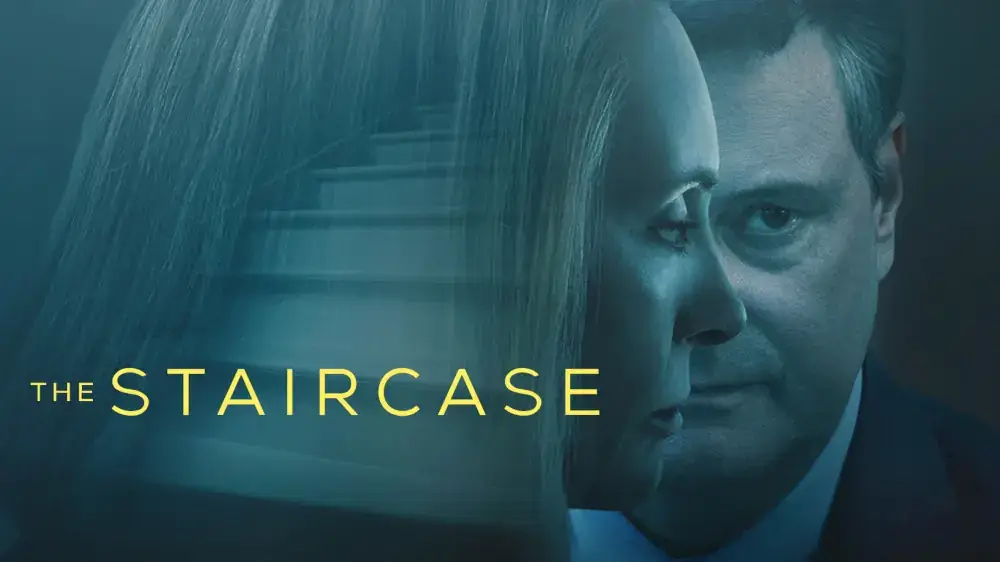
- Is possible to truly know a person, given the separation of the private from the public, the secrets we keep, and the different sides we show to different people in our lives? There is an especially memorable and hard-hitting scene in the television series The Staircase that comes to mind. Spoilers ahead.

The Staircase is based on a true story and follows Michael Peterson after the suspicious death of his wife, Kathleen. Throughout the investigation, shocking secrets are uncovered and multiple theories are explored. There are convincing arguments on both sides, and it may never be confirmed if Michael did indeed murder his wife. The only person who knows, beyond a shadow of doubt, whether Michael is guilty is none other than Michael himself. In the final scene, Michael ponders: “There was a moment where I knew who I was. But it was just a moment, and that became one thing after another. I got further and further from that moment. And then you came along… so far from that moment. It wasn’t a lie… just wasn’t the whole thing. But what two people ever know each other, really? Most of it is just smoke and mirrors. People don’t actually know who they’re with.” ↩︎