
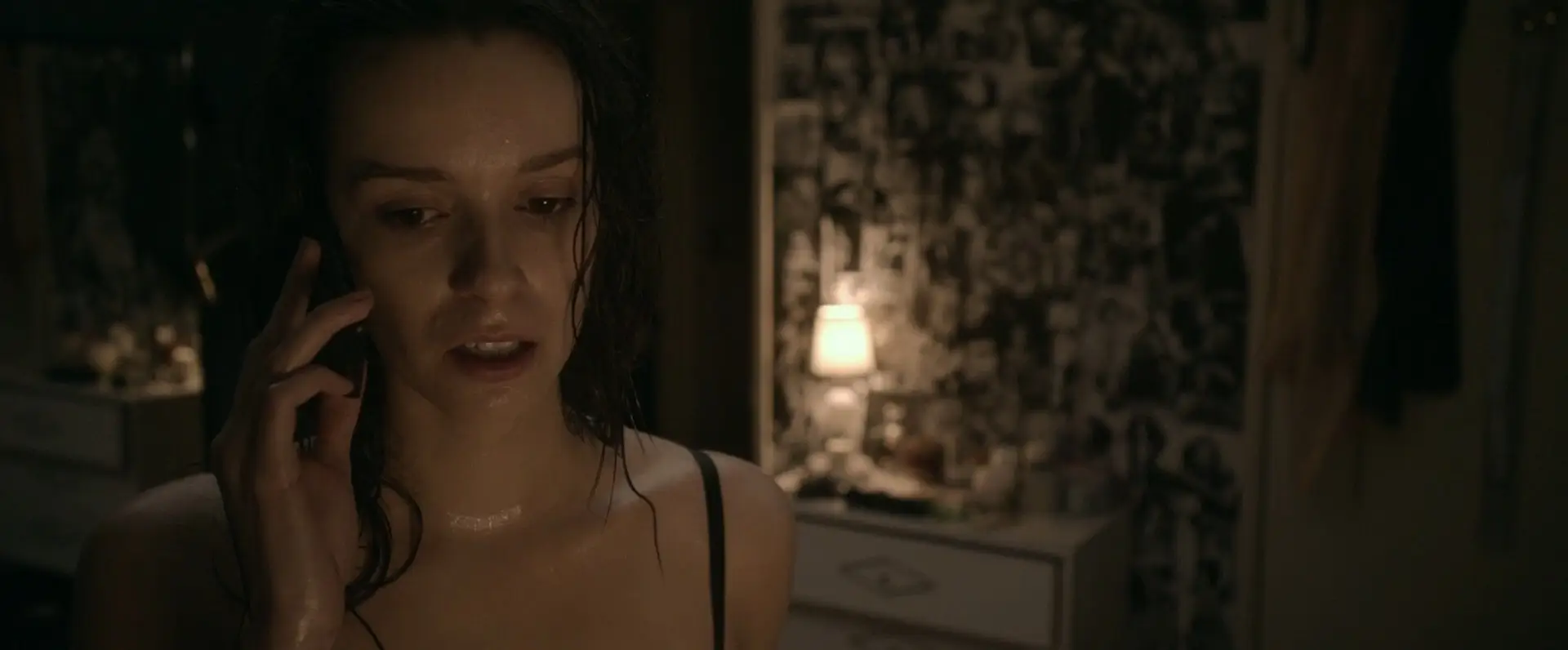
Female Loneliness and Ambition in the 2014 film “Starry Eyes”
Human ambition is fascinating: the drive and desperation to achieve a particular objective, and in many cases, even if it comes at the cost of your dignity. Sarah Walker (incredibly acted by Alexandra Essoe) from the 2014 film Starry Eyes, written and directed by Kevin Kölsch and Dennis Widmyer, is one such person with an unstoppable determination to be a famous Hollywood actress. She craves validation, attention, and hordes of adorers who chant her name and worship her, and she’ll do just about anything to get there.
But Starry Eyes isn’t just about Hollywood. It depicts a phenomenon familiar to many, one that extends itself beyond the dingy depths of Hollywood to… the very ordinary non-Hollywood people of the world. There’s the idea that if you try hard enough, you can do anything; once you get through that initial stage of suffering, the reward is heavenly. It’s no surprise that many souls have stumbled down this path, sometimes resorting to embarrassingly convoluted ways to climb to the top. On a broader level, Starry Eyes is also about being dissatisfied with life as it is, feeling alienated, the constant clamoring for something… more. And perhaps most importantly, it’s about a woman who’s prepared to endure it all.
A Daily Predicament That Eats Away at You
Most of us don’t want to be stuck in a job that exists only to pay the bills and isn’t fulfilling in the slightest. Most of us are on the hunt for jobs that need us as much as we need them. But the unfortunate reality is that most of us aren’t afforded the luxury to leave the relative safety net of our jobs. Having any job in this economy is also something you feel obliged to be grateful for, irrespective of how demeaning it is. Conversely, lamenting about your job and expressing a desire to leave are viewed as ungrateful and unwise.
Sarah’s Struggle for Self-Worth
Sarah, like many of us, is in a similar predicament. She works as a waitress at Big Taters (reminiscent of Hooters), a fast-food restaurant, and since the bodies of their female employees are essentially their marketing strategy, she is made to traipse around the place in a crop top and tights and put up with being constantly ogled by male customers, male chefs, and Carl, the male boss. So when Sarah is insistent on her decision to quit her degrading job at Big Taters in pursuit of a more glamorous, respectable life, it feels empowering (though what happens next is far from empowering). Yet, Carl insinuates that it’s a job she should be thankful for because having a steady job is something “a million other girls” would beg to have. He’s a creep, but a well-intentioned one.
“I am not a million other girls.”
The Inherent Sexualization of Women
Starry Eyes reminds women that no matter which rung of the ladder they are on, there is no escaping the male gaze in a society that is built around it, and that is the real horror of the film. Big Taters is a small part of a big problem, the problem being the constant scrutiny and objectification of women’s bodies, from voyeuristic men (who also lean too close to women while talking to them) to the unrealistic beauty standards perpetuated by the media. And that also includes, of course, the industry’s biggest names who take pleasure in treating women as mere commodities to be exploited and discarded the moment the next impressionable starlet comes along.
The Ominous Return of Astraeus Pictures
Sarah attends an audition for the lead actress in a horror film called The Silver Scream by the legendary production company Astraeus Pictures, which is making a comeback after falling off the last few years.
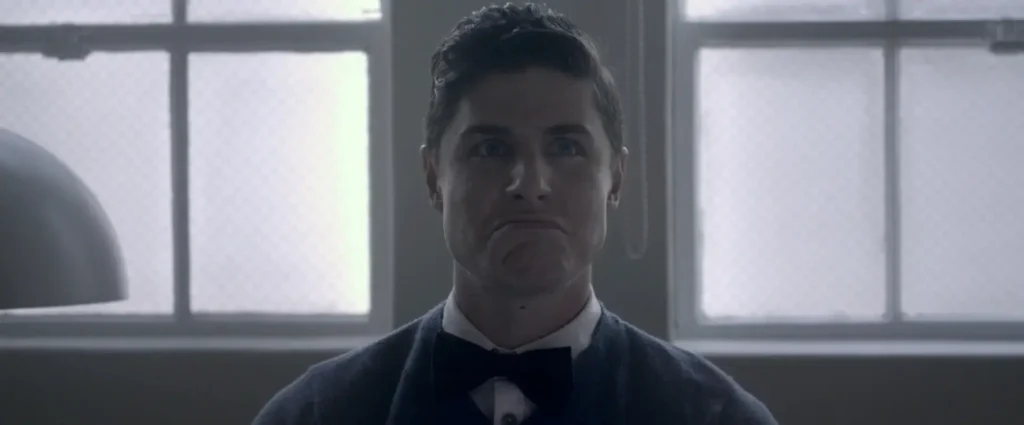
“When you exit this room, you will either have made a lasting impression or blend into the sea of thousands of forgotten girls who pass through these halls every day.”
The audition ends on a lackluster note that leaves her scurrying to the bathroom, where she manically swings around her handbag and pulls out chunks of her hair, a coping mechanism which gives her some catharsis. Having a violent outburst right after an interview would probably register as a red flag to the employer. Not the people at Astraeus, though. They immediately invite Sarah back for another round of audition, this time with the expectation that she “performs” for them her raw, unadulterated emotional breakdown.
Sarah, intent on getting picked for the role no matter what, proceeds to do it all — hair-pulling, body contortions, and guttural screams. For Astraeus, this only means one thing: she’ll do whatever it takes, even if it means losing any semblance of self-respect. This is what makes her prime for their exploitation, one that involves stripping as part of the audition and performing sexual favors to land the job. The behavior of the men Sarah encounters on the daily at Big Taters is undoubtedly abhorrent, but when placed side by side to her even more blatantly disturbing experience with Astraeus, feels almost inconsequential.
The film shows the ramifications of the inherent sexualization of women on women: they become more conscious of their perceived flaws and start viewing other women as threats.
Sarah’s Body Dysmorphia
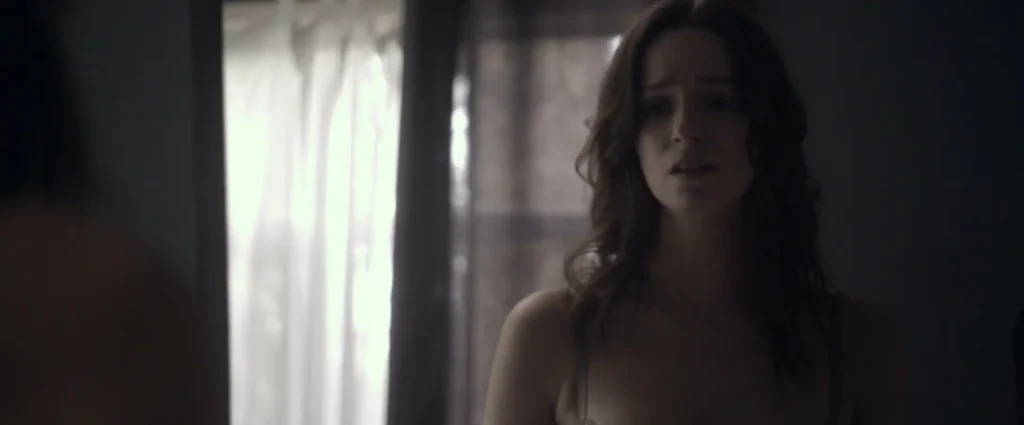
Sarah vs. Other Women
There is a palpable tension between Sarah and Erin, in particular. Jealousy, competition, and insecurity are rife in their so-called friendship. What’s unnerving is that, rather than blatant displays of hatred and spite, their underlying resentment of each other is more subtle yet deep-rooted.
Losing a competition for a role in a commercial where the director turns out to be a pervert might seem trivial in the grand scheme of things, but it’s not when you’ve constantly been one-upped by your archnemesis. In fact, Erin knows that Sarah isn’t taking the loss well but still brings it up in a rather callous manner anyway. And when Sarah shares that she was picked for an audition for The Silver Scream, Erin makes snide remarks and is noticeably bitter about it. Suffice to say, Erin’s unwarranted maliciousness towards Sarah continues throughout Starry Eyes, slowly but surely worming its way into Sarah’s psyche. It is only at the climax of the film (i.e. the massacre) when Erin displays real concern — a little too late, however, for the blood-soaked, knife-wielding Sarah who is now hell-bent on killing her.
Fortunately, not everyone in Sarah’s social circle is mean-spirited, namely Tracy, Sarah’s roommate, who is perhaps the only character in the film (next to Danny) that we are sorry to see die.
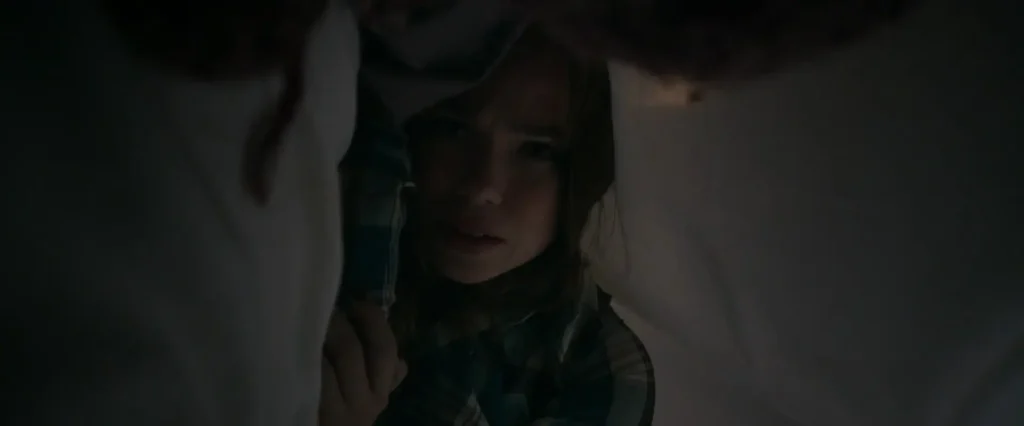
Unlike Erin’s often cruel demeanor and clear envy of Sarah’s success in securing an audition for The Silver Scream, Tracy is supportive of Sarah’s acting endeavors, occasionally casting skeptical glances at Erin when she makes questionable comments. When Tracy finds out that the producer at Astraeus had made inappropriate advances towards Sarah, she swiftly reassures her that she made the right decision to walk away.
Ambition, But at What Cost?
Back to Big Taters
“Are you a Taters girl?”
After failing the last stage of the audition because she did not engage in sexual acts with the producer at Astraeus, Sarah begrudgingly returns to Big Taters. Unsurprisingly, Sarah is subjected to Carl’s tiresome speech about the importance of valuing his work. And while every employer deserves a baseline respect until proven otherwise, there is some audacity in demanding that a female employee take your mission and vision for Big Taters seriously when the entire restaurant’s strategy is framed around the commodification of women’s bodies, which in itself merits no respect. Having to concede to calling yourself “a Taters girl” means that you are treated as more property than person.
“I kind of feel like I’m selling my soul already, so it may as well be for something I love.”
Sarah makes a valid point here, but Danny counters it with another valid point: who says you can’t slum it while making time for what you love? However, what Danny fails to grasp is that Sarah isn’t just passionate about films or acting, nor is she just an ambitious person who wants to be cast as the leading actress in a blockbuster film, much less in the film project by Danny, an amateur director with not a dollar to his name.
What Sarah is more driven by is a deep detestation of her current circumstances, along with a desperate desire to rise above it all (not merely compete with a sea of hopefuls) and command the undivided attention of others, particularly those who are quick to zero in on the hottest thing/person in the room (namely men). She is alienated from her social circle and isn’t content with an ordinary existence, especially one that involves Big Taters and the bothersome Erin. Within her is an unflinching adamance on doing more than just dreaming big: she wants to step off the hamster wheel and transcend the circumstances she is entrapped in. “In that respect,” director Widmyer explains, “the whole movie is a just a metaphor for that frustration of wanting to break into the industry and get on with your life.” It is thus no surprise why Sarah is drawn to the Astraeus cult, which promises its followers a gateway to Hollywood and unparalleled success and beauty.
Away from the Greasy Smell of Fast Food to Hollywood Fame
“Would you forgo your eyes for a new pair of eyes, eyes that see with our vision? Would you give up our body to become a vessel for our voice, for my voice? Will you give your old life away for a glorious, new life?”
And so it begins: Sarah returns to the filthy producer’s foreboding mansion. She passes the last stage of the audition, and Starry Eyes proceeds to go full-force body horror. Her body decays… she spews maggots and loses fingernails and a ton of hair, and blood and guts splatter as she unleashes her unbridled fury on those around her, frenziedly attacking them. The last bit of Sarah’s old skin is shed, literally and figuratively. All sense of humanity is lost, the transformation is complete, and she is reborn. Finally, she is assimilated into the Astraeus cult.
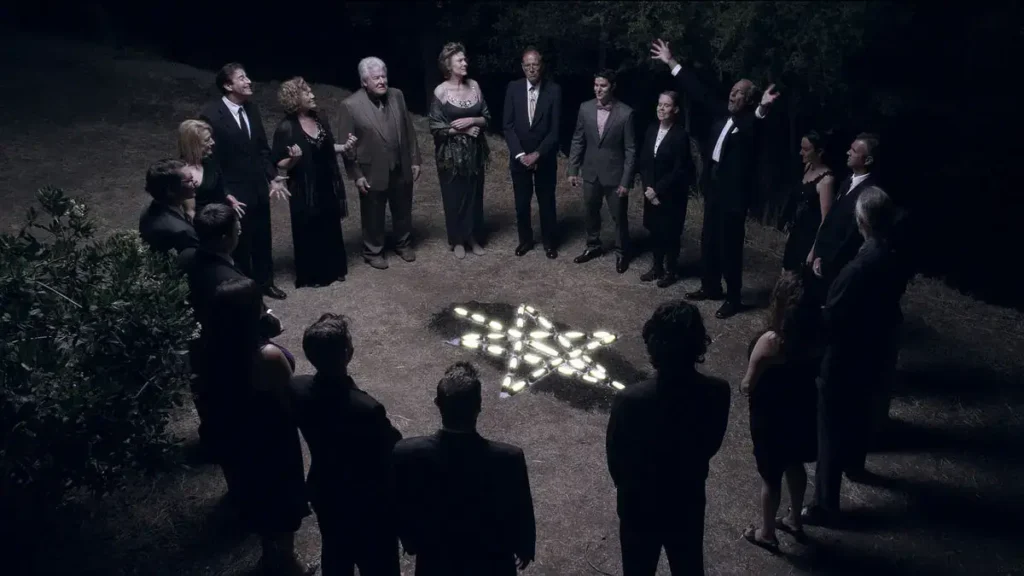
“Hail Astraeus.”